

Why Fruits and Vegetables Aren’t as Nutritious as They Used to Be
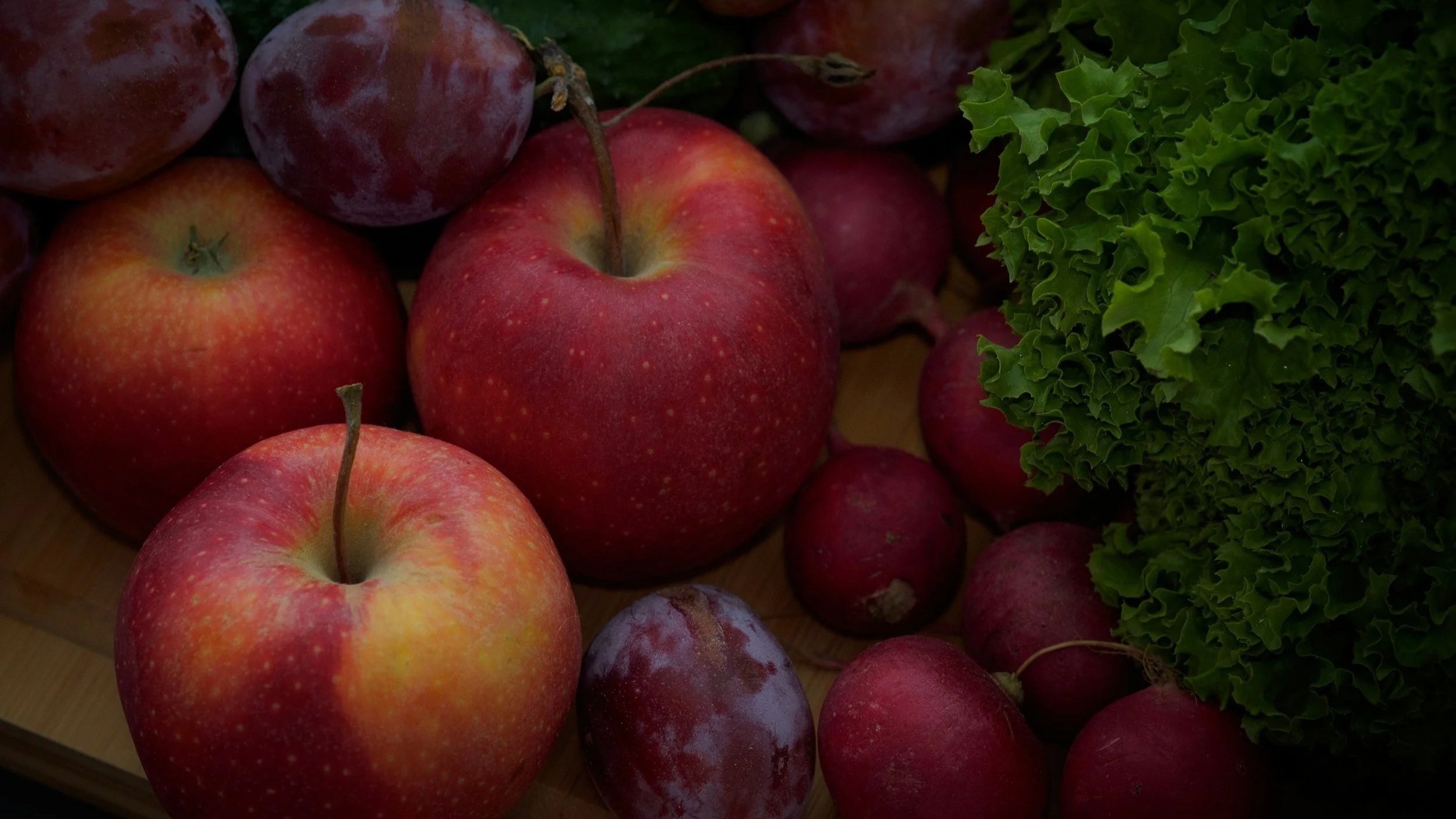
Our soil isn’t what it used to be, and that means our food isn’t either.
The same salad your grandmother ate simply doesn’t carry the same mineral punch today.
You can be “eating healthy” and still come up short on key nutrients, without changing a single thing on your plate.
🎧 Prefer to Listen?
Reading’s great, but sometimes it’s nice to just listen in. So we turned today’s blog into a conversation. Our two AI sidekicks, Max and Chloe, break down today’s blog so you can listen on the go!
Our Soil Isn't What It Used to Be
In the last 60–80 years, multiple analyses have shown significant declines in the mineral content of common fruits and vegetables. One recent review found that key minerals in foods such as apples, oranges, potatoes, and tomatoes have fallen by 20–50% for nutrients like calcium, magnesium, iron, and copper over the past several decades.
A 2024 paper in Foods describes an "alarming decline" in the nutritional quality of crops worldwide, driven by high‑yield varieties, heavy synthetic fertilizer use, and a shift away from traditional, nutrient‑dense crops.
How Modern Farming Dilutes Nutrients
Modern agriculture is optimized for yield, shelf life, and cosmetic perfection, not nutrient density. High‑yield cultivars grow faster and bigger, but they often dilute mineral content, especially when grown in degraded soils with chaotic fertilizer use.
As soils lose organic matter and micronutrients such as zinc, iron, and selenium, the plants grown on them contain less of those same minerals, a pattern documented in reviews linking soil degradation to human micronutrient deficiencies.
Even rising atmospheric carbon dioxide appears to play a role by increasing plant biomass while lowering concentrations of protein and minerals in crops.
Why This Shows Up in Women First
For women, these quiet changes compound existing nutritional pressure. Across menstrual years, pregnancy, postpartum, and midlife hormone shifts, women need relatively more iron, iodine, zinc, and B vitamins than many men.
When the baseline food supply is less nutrient‑dense than it used to be, it becomes harder to meet those needs "by accident" while eating a normal, modern diet.
The result is a familiar symptom cluster—fatigue, hair shedding, brittle nails, feeling cold or flat, slower recovery from stress—that can persist even when your diet looks good on paper.
Why Organ Meats Still Hit Different
This is where ruminant organs come in. While plant foods have seen documented declines in some minerals, analyses of beef liver and other edible offal show they remain extraordinarily dense in the very nutrients many modern diets lack.
Compared with muscle meat, beef organs provide substantially higher levels of vitamin A, vitamin B12, folate, riboflavin, iron, zinc, copper, and selenium per gram.
A modest serving of beef liver, for example, can supply more than half of daily needs for iron, zinc, and several B vitamins, and essentially all of vitamin A.
Because these nutrients come in highly bioavailable forms (such as heme iron and true B12), they help backfill the micronutrient shortfall created by depleted soils and modern crop varieties.
Organ Supplements as a Soil Aware Strategy
You cannot personally fix the global soil crisis, and you should not abandon fruits and vegetables while we wait for agriculture to change. Produce is still essential for fiber, phytonutrients, and overall metabolic health.
But you can acknowledge that the micronutrient density of many crops is lower than it was for your grandparents—and respond accordingly. Thoughtfully sourced, freeze‑dried beef organ supplements act like a concentrated, soil‑aware ally: they preserve the traditional practice of nose‑to‑tail eating, deliver minerals and fat‑soluble vitamins in forms your body recognizes, and sit alongside a whole‑food diet instead of replacing it.
In a world where our topsoil is thinner and our crops are less rich than before, organ nutrition helps thicken the foundation your health is built on.
If you want all natural support to help bridge the nutrient gap created by depleted soil, join the waitlist for Sarenova's Formula No. 06 today.
💡 Key Takeaways
Soil depletion has significantly lowered the mineral content of many fruits and vegetables over recent decades.
Modern high‑yield farming prioritizes size and shelf life over nutrient density, diluting vitamins and minerals in crops.
Women are especially vulnerable to micronutrient shortfalls in iron, zinc, and B vitamins due to higher life‑stage demands.
Beef organs remain extremely nutrient dense, packing vitamin A, B12, folate, iron, zinc, and selenium in small servings.
Thoughtfully sourced organ supplements help bridge the gap between depleted soil and your body’s micronutrient needs.
-
(AI-generated conversation and transcript)
Why_your_healthy_food_lacks_vital_nutrients
[00:00:00] Max: So if you wanted to get the exact same amount of iron from a tomato today as your grandmother did back in say 1950,
[00:00:07] Chloe: right?
[00:00:08] Max: You wouldn't just eat one tomato, you'd have to eat two, maybe even three of them.
[00:00:12] Chloe: Yeah. It's wild.
[00:00:13] Max: It is. And um, we're currently eating more food than ever before in human history, but on a microscopic like cellular level Yeah.
[00:00:23] We're essentially starving
[00:00:24] Chloe: completely.
[00:00:25] Max: And there's this incredibly frustrating, modern paradox that I think. So many of us are dealing with right now. You are doing everything right. You're eating your greens, you're meticulously avoiding junk food. You track what goes onto your plate, and yet
[00:00:39] Chloe: you still feel totally drained.
[00:00:41] Max: Exactly. You hit that mid-afternoon wall and your energy just completely bottoms out.
[00:00:45] Chloe: And it's a profoundly common experience. People look at their perfectly curated, colorful plant heavy plates, and they think, well, there must be a flaw in my own biology.
[00:00:55] Max: Right? Like, what's wrong with me?
[00:00:56] Chloe: Exactly. They assume they must not be sleeping enough [00:01:00] or, uh, they're just not managing their modern stress well enough.
[00:01:03] They internalize the blame.
[00:01:04] Max: Yeah, always.
[00:01:05] Chloe: But when we actually look at the underlying agricultural data, I mean, it fundamentally shifts that blame away from the individual consumer.
[00:01:14] Max: Okay, let's unpack this because I was reading through the research specifically this really fascinating deep dive from a source called The Soil Depletion Blog, and honestly, it completely rocked my baseline definition of what healthy food even is.
[00:01:29] Chloe: It really changes your perspective.
[00:01:30] Max: It does. I just assumed, you know, a spinach leaf is a spinach leaf and apple in 1950. Is biologically identical to an apple in 2024.
[00:01:39] Chloe: And that is the logical assumption.
[00:01:40] Max: Right? Right. But the core premise here is that you can be eating healthy by every conceivable, modern standard and still come up entirely short on vital nutrients without changing a single habit.
[00:01:51] Chloe: Yeah.
[00:01:52] Max: So today we're gonna explore this hidden decline in our foods nutrient density.
[00:01:55] Chloe: Yeah.
[00:01:55] Max: Look at why it impacts women particularly hard. And, uh, delve [00:02:00] into an ancient, somewhat surprising food for a strategy The research suggests to actually fix it.
[00:02:05] Chloe: It's a great agenda and what's fascinating here is well, before we can even talk about how to fix this nutrient gap, we have to look at the mechanical reality of why the food on our plates is literally losing its value.
[00:02:16] Max: Okay, weigh it on me. Why is a modern apple fundamentally different?
[00:02:20] Chloe: So if we look at the data over the last 60 to 80 years, multiple analyses, including a very comprehensive 2024 paper published in the Journal Foods, they point to an alarming, documented decline in the nutritional quality of crops worldwide.
[00:02:37] Max: Worldwide. So this isn't just one bad farm?
[00:02:39] Chloe: No, it's systemic. We are looking at key minerals, um, like. Calcium, magnesium, iron and copper plummeting by anywhere from 20 to 50% in staple crops.
[00:02:49] Max: Wait 20 to 50%?
[00:02:50] Chloe: Yes. In apples, oranges, potatoes, tomatoes, the absolute foundational elements of what we consider a healthy diet,
[00:02:59] Max: a 20 to [00:03:00] 50% drop is massive.
[00:03:01] We aren't just talking about a tiny fraction of percent or some slight statistical error here.
[00:03:05] Chloe: Not at all. It's a huge structural shift, but
[00:03:07] Max: I need to understand the mechanics. Like I was trying to visualize this while reading the notes and the best way my brain could process it is like blowing up a balloon.
[00:03:16] Chloe: Oh, that's a good way to put it.
[00:03:17] Max: Right. You buy this beautiful, giant shiny apple at the grocery store. It looks massive and impressive on the shelf. Way bigger than the little heirloom varieties you might see at a farmer's market.
[00:03:28] Chloe: Yeah, the cosmetic perfection.
[00:03:29] Max: Exactly. But the actual material, like the physical nutrients pulled from the earth just gets stretched thinner and thinner to fill out that larger cosmetic size.
[00:03:40] Chloe: The scientific term for your balloon metaphor is The dilution effect.
[00:03:43] Max: The dilution effect.
[00:03:44] Chloe: Yeah. And to understand why it happens, you have to look at how modern agriculture is actually designed.
[00:03:50] Max: How so?
[00:03:51] Chloe: Well, it's heavily optimized.
[00:03:52] Max: Yeah.
[00:03:53] Chloe: But it's optimized for yield, for transportability shelf life. And as you said, cosmetic perfection.[00:04:00]
[00:04:00] It is not optimized for nutrient density. We've bred high yield cult divers that grow incredibly fast, so you are consuming the exact same number of calories. The plant has the same amount of carbohydrates and water, but you're getting a fraction of the vital minerals '
[00:04:14] Max: cause it grew too fast.
[00:04:16] Chloe: Exactly. The root systems of these fast growing crops simply do not have the time to slowly absorb the micronutrients from the soil at the same rate that the plant is adding physical biomass.
[00:04:30] Max: And I guess that's assuming those nutrients are even in the soil to begin with,
[00:04:33] Chloe: which is a huge assumption.
[00:04:35] Max: Right. Because the research heavily emphasizes that our soils are severely degraded. But again, I wanna get into the how. If farmers are using fertilizers to grow these massive crops, aren't they, you know, putting nutrients back into the ground?
[00:04:49] Chloe: Well, they are putting some nutrients back, but not the right ones for human cellular health.
[00:04:54] Max: What do you mean? What are they putting in
[00:04:56] Chloe: the synthetic fertilizers used in modern conventional farming? Typically just [00:05:00] pump nitrogen, phosphorus, and potassium, often called NPK back into the dirt.
[00:05:04] Max: Okay. NPK.
[00:05:05] Chloe: Yeah.
[00:05:05] And those act like steroids for the plant. They make the crop grow tall, green, and heavy very quickly,
[00:05:12] Max: but there's a catch,
[00:05:13] Chloe: a huge one. Those fertilizers completely bypass the complex microscopic web of the soil. Healthy soil actually relies on michal fungi and bacteria to slowly break down rocks and organic matter into bioavailable trace minerals.
[00:05:29] Things like zinc, iron, and selenium.
[00:05:32] Max: So the synthetic stuff just overrides that natural process
[00:05:35] Chloe: overrides and often destroys it. When we use heavy synthetics and constant tilling, we destroy that microbial web. So year after year, the soil bank account gets overdrawn.
[00:05:44] Max: Wow.
[00:05:45] Chloe: If the zinc and selenium aren't physically present in the soil anymore, they cannot magically appear in the plant, no matter how big and green that plant looks on the shelf.
[00:05:53] Max: That makes total sense. But it's so frustrating.
[00:05:55] Chloe: Yeah.
[00:05:56] Max: And um, there was one other detail in the data that. Completely threw me. I [00:06:00] honestly thought I was misreading it at first.
[00:06:01] Chloe: The carbon dioxide part?
[00:06:02] Max: Yes. The text points to rising atmosphere. Carbon dioxide is a culprit here too. Which I mean, I always learned in green school biology that carbon dioxide is plant food.
[00:06:11] Chloe: Right? Right.
[00:06:12] Max: So if plants have more food, shouldn't they be healthier? How does CO2 make the dilution effect worse?
[00:06:20] Chloe: It does act as plant food, but that is precisely the problem. Plants use carbon dioxide for photosynthesis to create sugars and grow.
[00:06:27] Max: Okay,
[00:06:28] Chloe: so with higher levels of CO2 in the atmosphere, plants are essentially binging on carbon,
[00:06:33] Max: like a sugar rush,
[00:06:34] Chloe: exactly like a sugar rush.
[00:06:36] They take in that extra carbon and produce significantly more carbohydrates. They grow much larger and produce more biomass. But this rapid carbohydrate growth further dilutes the concentrations of protein and essential minerals within the crop.
[00:06:48] Max: Oh, wow. So they're just packing on empty carbs basically?
[00:06:51] Chloe: Basically, yes.
[00:06:52] Max: Yeah.
[00:06:52] Chloe: The root system just can't keep up with that carbon fueled growth spurt above ground.
[00:06:57] Max: So the system is doing exactly what we asked it to do, just [00:07:00] with terrible side effects.
[00:07:01] Chloe: That's the painful irony. The entire agricultural system is actually functioning exactly as it was designed to.
[00:07:06] It produces high yields and visually. Perfect produce to feed a massive global population,
[00:07:12] Max: but at a hidden cost,
[00:07:13] Chloe: a massive hidden cost to human micronutrient health,
[00:07:16] Max: which brings up a really crucial point if the baseline nutrients in our entire food supplier dropping across the board. Who is feeling this impact?
[00:07:24] First? Who is the canary in the coal mine here?
[00:07:28] Chloe: That's a vital question
[00:07:29] Max: because the research makes a very specific pivot here, pointing out that this burden. Is falling disproportionately on women?
[00:07:36] Chloe: Yes. The data points directly to women's health as the primary intersection where this global agricultural crisis becomes an acute personal health crisis.
[00:07:46] Max: And why is that?
[00:07:47] Chloe: It really comes down to sheer mechanical biological demand. Women face compounding nutritional pressures throughout their lives due to distinct biological phases
[00:07:57] Max: like the menstrual years, pregnancy, things like that.
[00:07:59] Chloe: [00:08:00] Exactly. The menstrual years. Pregnancy, postpartum recovery and midlife, hormonal shifts.
[00:08:04] All of these require an immense amount of physical resources.
[00:08:07] Max: Let's break those down a bit, because the sources specify that women require relatively higher amounts of iron, iodine, zinc, and B vitamins than many men do, just to maintain a baseline of health. Why those specific minerals?
[00:08:20] Chloe: Think about the mechanics of what the body is actually doing during the menstrual years.
[00:08:25] There is a recurring loss of iron that must be constantly replenished.
[00:08:28] Max: Right?
[00:08:29] Chloe: And then during pregnancy, a woman's body is literally building a new skeletal system and expanding her own blood volume by nearly 50%.
[00:08:38] Max: 50%. That's incredible.
[00:08:39] Chloe: It is. And it severely drains maternal iron and calcium reserves. Then as women enter midlife and perimenopause.
[00:08:46] Hormonal shifts drastically change how the body metabolizes nutrients.
[00:08:50] Max: But the target is always moving,
[00:08:52] Chloe: always. Zinc, for example, becomes incredibly critical because it helps regulate hormone receptor sensitivity. And iodine is [00:09:00] heavily, heavily demanded by the thyroid to manage metabolism, which is often under immense strain.
[00:09:05] During these transitions,
[00:09:07] Max: now combine that high biological demand with the dilution effect we just talked about.
[00:09:11] Chloe: Hmm.
[00:09:11] Max: I mean, in the past, a woman eating a varied whole food diet. Might have been able to meet those high demands naturally from the food grown in her local environment.
[00:09:20] Chloe: Yes, historically that was the case,
[00:09:22] Max: but because the modern food supply is so much less dense, it is now incredibly difficult to meet those needs by accident on a standard diet.
[00:09:31] Chloe: Almost impossible, honestly.
[00:09:33] Max: Which brings up a question I've been chewing on since reading this.
[00:09:35] Chloe: Hmm.
[00:09:36] Max: Are millions of women walking around today? Just accepting chronic symptoms as normal aging or just the reality of modern stress when in reality they're suffering from a hidden soil driven micronutrient deficit.
[00:09:50] Chloe: I would argue it is highly likely we see a very specific cluster of symptoms constantly being normalized.
[00:09:56] Max: Like what
[00:09:56] Chloe: chronic fatigue. Significant hair shedding, brittle [00:10:00] nails, feeling physically cold all the time due to thyroid sluggish. Oh,
[00:10:04] Max: the feeling cold thing? Yeah.
[00:10:05] Chloe: Yeah. Or feeling emotionally flat or just recovering really slowly from a stressful week.
[00:10:11] Women go to their doctors with this exact cluster of symptoms, and their standard blood panels often come back looking, quote unquote normal because the clinical reference ranges are quite broad.
[00:10:20] Max: Right? So the doctor says, you're fine.
[00:10:22] Chloe: Exactly. They're told they just need to sleep more or reduce stress, and their diet looks perfectly healthy On paper.
[00:10:28] They're eating the spinach, the tomatoes, the organic apples,
[00:10:32] Max: but the nutritional databases, those diets are based on don't account for the depleted soil. Those specific vegetables were grown in.
[00:10:39] Chloe: Bingo.
[00:10:40] Max: You're checking all the boxes, but the boxes themselves are empty. It's incredibly frustrating.
[00:10:44] Chloe: It is. And if we connect this to the bigger picture, it shows how deeply interconnected our ecosystems are.
[00:10:51] Environmental health, specifically the microscopic health of our top soil is intimately and biologically linked to human, [00:11:00] hormonal health and metabolic function.
[00:11:02] Max: It's a direct pipeline.
[00:11:03] Chloe: You cannot degrade the earth without eventually degrading the biological resilience of the people living on it. And women's biology is simply the first to reflect that deficit.
[00:11:12] Max: Okay, so the plants are depleted, the soil is exhausted. We are walking around exhausted because our food is essentially nutritionally hollowed out.
[00:11:20] Chloe: That's the state of things.
[00:11:21] Max: Yeah. Yeah. I think the person listening right now is probably wondering, well, what do I actually do with this information? Because obviously you and I cannot personally fix the global agricultural system by tomorrow morning.
[00:11:32] Chloe: Sadly, no,
[00:11:33] Max: we can't Remineralize. The Earth's topsoil before breakfast. So where do we get these missing nutrients? And this is where the source material points us in a direction that might seem really counterintuitive to a lot of modern wellness trends.
[00:11:46] Chloe: Yes, it takes a sharp turn.
[00:11:48] Max: It points us away from the garden and toward the pasture.
[00:11:51] Specifically ruminant organ meats.
[00:11:55] Chloe: Yes. The nutritional profile of ruminant organs, things like deli [00:12:00] heart and other edible awful is completely unique. Okay. While plant foods have suffered these documented mineral declines over the last 80 years, beef liver has remained extraordinarily dense in the exact nutrients that our modern diets are lacking.
[00:12:14] Max: I have to pause you there because I know that for a lot of modern pals, the idea of eating beef liver sounds highly unappealing.
[00:12:20] Chloe: Oh, absolutely.
[00:12:21] Max: Culturally, we've moved so far away from nose to tail eating. I mean, I can barely look at raw liver, let alone figure out how to cook it so it actually tastes good.
[00:12:29] Chloe: It's definitely a lost art for most of us.
[00:12:31] Max: Plus, isn't there a risk of vitamin a toxicity? I feel like my doctor's always pushing kale and blueberries. Not awful.
[00:12:38] Chloe: Mm.
[00:12:38] Max: Are we seriously suggesting people start eating liver?
[00:12:41] Chloe: Well, to address the toxicity concern first, uh, that is largely a misconception stemming from acute hyper vitam osis a, which historically happened when explorers ate the livers of apex predators, like polar bears.
[00:12:55] Max: Oh, polar bears, okay, so not a typical Tuesday dinner.
[00:12:57] Chloe: Exactly. The concentration of vitamin A in [00:13:00] a normal dietary serving of beef or lamb, liver is entirely safe and actually highly beneficial for the average person
[00:13:07] Max: they could to know.
[00:13:08] Chloe: But to your broader point about the cultural aversion, it is a very recent phenomenon.
[00:13:12] Historically, organ meats were the most prized part of the animal. Hunters would consume the liver immediately for energy and often give the lean muscle meat to the dogs.
[00:13:22] Max: Wow. So we have it totally backward now because the data comparing organ meats to regular muscle meat like a standard chicken breast or steak is staggering.
[00:13:31] Chloe: It really is.
[00:13:32] Max: You'd have to eat a massive amount of modern spinach to get the same nutrients found in a tiny piece of liver. It's like nature's original cheat code.
[00:13:40] Chloe: The contrast is orders of magnitude different compared to lean muscle meat, or plant sources. Beef organs provide massively higher levels of vitamin A, vitamin B12, folate, riboflavin, iron, zinc.
[00:13:53] Copper and selenium per gram.
[00:13:56] Max: All the stuff we just said is missing from the soil.
[00:13:58] Chloe: Precisely. A [00:14:00] very modest serving of B liver, perhaps the size of a golf ball can supply more than half of your daily biological needs for iron, zinc, and several B vitamins and essentially 100% of your daily vitamin A requirement.
[00:14:12] Max: But the sheer volume of the nutrients is only half the story here. Right. Because it doesn't matter if a mineral is technically in a food, if your body can't actually unlock it.
[00:14:20] Chloe: Yes, exactly.
[00:14:21] Max: I wanna talk about bioavailability because the research leans heavily on this concept.
[00:14:26] Chloe: Bioavailability is the crux of the issue.
[00:14:29] You can crush up a rock that contains iron and swallow it, but your digestive system isn't going to absorb it. Right. The nutrients found in organ meats come in forms that the human body instantly recognizes and efficiently absorbs without having to perform complex energy, heavy metabolic conversion.
[00:14:45] Max: Gimme an example of that conversion process, like how does it differ from eating a plant
[00:14:49] Chloe: Take iron. Plant-based iron is non-heme iron. It is often tightly bound to compounds called phytates or oxalates, which are basically [00:15:00] antinutrients the plant uses to defend itself.
[00:15:01] Max: So the plant doesn't wanna give up its iron.
[00:15:03] Chloe: Exactly. The human body has to work very hard to break those bonds and convert that non-heme iron into a usable form. And in the process you lose a significant percentage of it.
[00:15:13] Max: Just flush right out.
[00:15:14] Chloe: Yeah. Organ meats, on the other hand, provide heme iron. It is already in the exact biological format that your own blood uses.
[00:15:22] Your body absorbs it directly and immediately.
[00:15:25] Max: Oh, so it's a direct match?
[00:15:26] Chloe: Yes. The same goes for vitamin B12. Plants do not provide true B12. They provide analogs that our bodies cannot utilize efficiently. Liver provides true highly bioavailable B12.
[00:15:39] Max: So by introducing these highly bioavailable, dense forms of nutrients, you are effectively backfilling the exact shortfall created by the dilution effect In modern crops,
[00:15:50] Chloe: that's the entire strategy.
[00:15:52] Max: The tomato might only have half the iron it used to. The organ meat makes up the difference instantly. It acts as a hyper [00:16:00] concentrated nutritional safety net.
[00:16:01] Chloe: Precisely. It preserves this ancient, traditional human practice of nose to tail eating, which allowed our ancestors to thrive even in really harsh environments.
[00:16:10] Max: Now, from a purely scientific standpoint, I completely understand the logic, but let's be pragmatic. Yeah. Most people listening to this are not gonna start navigating the awful section at their local butcher.
[00:16:20] Chloe: Probably not.
[00:16:20] Max: They aren't gonna start frying up liver and onions on a Tuesday night. I'm certainly not.
[00:16:24] The author of the blog we're looking at actually points to a highly specific modern workaround for this, which they call a soil aware strategy,
[00:16:31] Chloe: right? A soil aware strategy is essentially about bridging the gap between historical nutrient density and modern convenience. And the most important caveat the author makes upfront is that you should not abandon fruits and vegetables.
[00:16:45] Max: Which is a huge relief because we still need those plants. I love my salads.
[00:16:49] Chloe: Absolutely. Produce remains absolutely essential for dietary fiber, for feeding the microbiome in your gut for phytonutrients and just for overall metabolic health.
[00:16:59] Max: [00:17:00] So don't throw away the apples.
[00:17:01] Chloe: Please don't. The goal is not to replace your plant-based foods with meat.
[00:17:05] The goal is to acknowledge the reality that the micronutrient density of those crops is structurally lower than it was decades ago, and to respond to that reality by intelligently supplementing the shortfall.
[00:17:16] Max: The specific work around the blog author suggests is using freeze dried beef organ supplements.
[00:17:22] They actually name drop a wait list for something called Sonova's Formula. No,
[00:17:26] Chloe: no. Six. Yes, they do.
[00:17:27] Max: Now whether you use that specific brand or another high quality source, the underlying logic is what's really interesting to me from a logistical standpoint. Taking a freeze dried capsule is a lot less intimidating than trying to cook organ meats from scratch,
[00:17:41] Chloe: and the mechanism of freeze drying is what makes it so effective.
[00:17:45] Max: How so? Like why freeze dry instead of just cooking it and putting it in a pill?
[00:17:48] Chloe: Well, when organs are gently freeze dried rather than heated, it preserves the delicate, fat soluble vitamins, the enzymes, and the bioavailable minerals like he iron. [00:18:00] Heat can destroy a lot of that.
[00:18:01] Max: Oh, I see.
[00:18:02] Chloe: So freeze drying allows you to get the true benefits of nose to tail eating, delivering those minerals in a form your body recognizes while simply sitting alongside your modern whole food diet.
[00:18:13] Max: You don't have to overhaul your entire culinary lifestyle. You just have to acknowledge that your healthy salad. Through no fault of your own needs a biological boost.
[00:18:22] Chloe: Exactly.
[00:18:23] Max: It's about finding ways to backfill those missing micronutrients, however you choose to do it.
[00:18:28] Chloe: It is a really balanced approach.
[00:18:30] Max: Mm-hmm.
[00:18:30] Chloe: It directly acknowledges the macro crisis, you know, the thinner top soil, the diluted crop yields, the systemic issues of modern agriculture. While providing the individual with a highly effective micro solution,
[00:18:44] Max: you can control what's in your own body.
[00:18:46] Chloe: Yes, you are thickening the nutritional foundation that your own personal health is built upon.
[00:18:51] Giving your body the raw materials it needs to manage stress and hormonal shifts even while we wait for global agricultural practices to slowly catch up. [00:19:00]
[00:19:00] Max: So we've covered a lot of ground in this deep dive today. We started with that really frustrating reality of doing everything right, but still feeling exhausted,
[00:19:09] Chloe: right?
[00:19:09] Max: We looked at the alarming data showing how our depleted soils and high yield farming have physically diluted the nutrients in our crops. We explored the disproportionate physical toll this takes on women's biology, especially during major hormonal transitions.
[00:19:23] Chloe: A huge takeaway.
[00:19:24] Max: And finally, we looked at how an ancient practice consuming highly bioavailable organ meats can serve as a modern safety net.
[00:19:31] Whether you're brave enough to cook it yourself or you're using a freeze dried supplement like anova.
[00:19:36] Chloe: The transition from understanding a hidden systemic problem to realizing you actually have a tangible biological solution is incredibly empowering.
[00:19:48] Max: It really is, and I want to emphasize this to you listening right now, if you have been hitting a wall with your health, your energy, or dealing with symptoms like hair shedding and fatigue, despite feeling like you're following [00:20:00] all the rules of a healthy lifestyle.
[00:20:02] Please hear this.
[00:20:03] Chloe: It's so important.
[00:20:04] Max: It might not be a failure of your willpower, your meal planning, or your ability to handle stress. It might simply be a reflection of the exhausted soil. Your food was grown in. The rules of the nutritional game have quietly changed out from under us.
[00:20:16] Chloe: And recognizing that fact allows you to stop blaming yourself and start adapting your strategy.
[00:20:21] Max: It really does, and it leaves me with this final thought to mull over, and I want you to think about this too as you go about your day. If our relentless pursuit of bigger, faster, and prettier and modern agriculture sure has secretly starved us of the very nutrients we need to thrive on a cellular level,
[00:20:39] Chloe: oh,
[00:20:39] Max: what other areas of our hyper optimized modern lives might be suffering from this exact same dilution effect disguised as progress.
[00:20:46] Something to chew on until next time.